NEWS CENTER
|
Why Bioplastics Will Not Solve the World
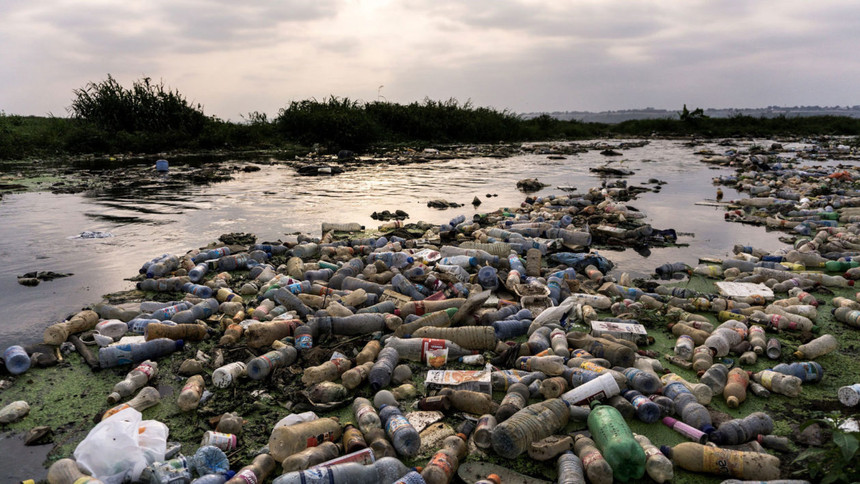
Plastic waste lines the banks of the Makelele River in the Democratic Republic of the Congo. JOHN WESSELS/AFP VIA GETTY IMAGES --------------------------------------------------------------------------------------------------------------------------------------------------- And because PLA's are generally mechanically recycled — which means they are cleaned, shredded, melted down, and made into pellets to be used again — they can contaminate the waste stream of petroleum-based plastics that are chemically recycled. On the other hand, PHAs can be made from sugars grown in algae and so there is no impact on food production. But using algae to produce bioplastic ingredients is expensive and it could take years before PHA plastics could be scaled up to a level that substantially decreases the cost. Experts say that the challenges of introducing bioplastics on a massive scale show how hard it will be to replace the billions of plastic bottles polluting the planet. “There isn't a silver bullet,” said Simon Reddy, who directs Pew’s ocean plastic program and was an author of the recent report. Instead, a variety of new approaches are needed to overhaul the current economy. “It’s about designing products for recycling,” he said. “Currently we don't do that. The information on the label about plastics is vague and unintelligible. The recyclability should be first and foremost.” In Europe about 42 percent of plastic packaging was recycled in 2017, while in the U.S. just 8.4 percent of plastic is recycled. Some small recycled plastic successes are taking place. Evian, the spring water bottler, recently launched a bottle made from 100 percent recycled PET. The company says its goal is to become what is known as “fully circular” — to have all of its bottles made from 100 percent recycled plastic by 2025. And Coca-Cola has vowed to recycle one plastic bottle for every bottle it sells by 2030. Alternatives to traditional PET bottles are slowly being developed, though on a small scale. Deposits on plastic bottles have also helped raise recycling rates, especially in Europe, where 10 countries have implemented small deposits on plastic bottles and achieved impressive returns — including 97 percent in Norway. |